
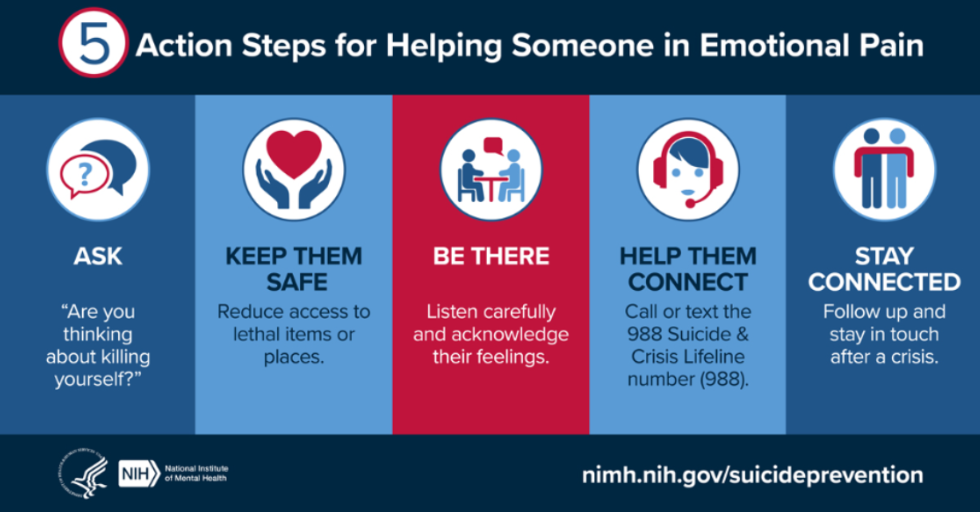
- Ask someone you are concerned about if they’re thinking about suicide. Studies show that asking someone if they are having thoughts of suicide does not increase the likelihood of dying by suicide or increase suicidal thoughts
- Keep them safe through reducing access to lethal means (click here for lethal means safety reference guide).
- Be there. Listen to them and acknowledge their feelings, whether in person or via phone.
- Help them connect with support, such as the 988 crisis line.
- Stay connected with them by following up regularly and staying in touch.
*Please note: this does not replace QPR training, and QPR training is still recommended.
- Contact 988
- Use the Do’s and Don’ts
- 🟢Do:
- Be direct and talk openly. Asking someone if they are feeling suicidal can bring them relief.
- Be willing to listen.
- Validate and allow expression of their feelings.
- Be non-judgmental.
- Ensure they have no access to lethal-means or dangerous objects.
- Emphasize that help is available and seek out crisis resources (e.g., 988).
- 🛑Don’t:
- Invalidate the person’s feelings.
- Panic if someone starts talking about suicidal feelings. Talking about suicide is a crucial and important first step.
- Debate whether suicide is right or wrong, or whether their feelings are good or bad.
- Ignore or abandon them.
- 🟢Do:
- Conversation Guide: How to ask someone if they are thinking about suicide
- Suicide Prevention Training: Request a QPR (Question, Persuade, Refer) Presentation
5 Tips For Supporting Those Who Have A Different Identity Than Your Own
- Educate yourself and try to know what you don’t know. Don’t rely on the person you are supporting to educate you on their identity.
- Understand that identity may affect (mistrust and stigma) a person's willingness to ask for help and who they ask for help. This is not something to argue against, but rather genuinely seek to understand where this may be coming from, and be open to learning.
- See identity as a possible strength or protective factor. Many people are proud of where they come from and can lean on that pride for sources of hope.
- If you find yourself having a hard time understanding someone you are trying to support, ask yourself if it may be your own identity lens that is getting in the way. Then, regroup and genuinely show interest and compassionately seek to understand where they may be coming from.
- Ask yourself, am I a safe person? As much as you want to help, you may not be perceived as a safe support. Ask if there is someone else they may feel more comfortable talking to.