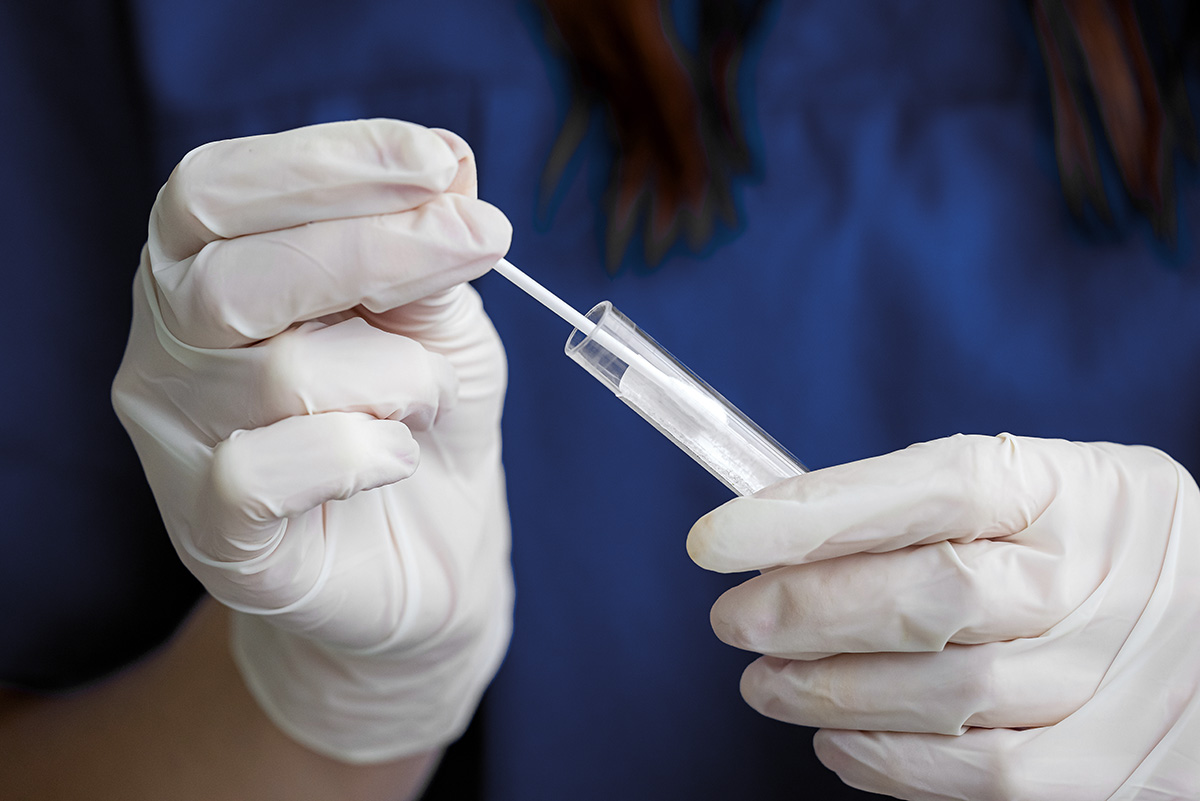
Get screened, treated, and connected to prevention options (PrEP/PEP). Most students can access common STI tests with no fees/insurance billing
Contraception, STI test orders, and related care are available through UHC’s Gynecology and Sexual Health and Primary Care Clinics.
When to get an STI assessment
Getting tested for STIs can reduce anxiety about your health, help you understand risk and safer sex options, and get earlier medical care if you are infected
You should have an STI assessment if you have been (or may have been) exposed to an STI or if you experience symptoms, such as:
- Unusual discharge
- Painful or burning with urination
- Genital skin changes (rash, sore, blister, growths)
- Pelvic discomfort or pain
- Testicular pain
What to expect at your visit
An assessment consists of a brief sexual history, education, a physical examination if necessary, and possible laboratory testing
Tests may require a urine sample; oral, vagina, penile or rectal swab; cervical culture and/or blood draw
It is not possible to test for all STIs; talk to your health care provider about what tests are best for you
STI Tests Available and Cost for Enrolled Students
- There are no fees or insurance billings for common STI tests for currently enrolled U-M students or as part of the Sexual Assault Exam or as a result of sexual assault.
- Chlamydia
- Gonorrhea
- Herpes
- HIV (conventional--see more options for HIV testing below)
- Mycoplasma genitalium
- Syphilis
- Trichomonas
- Testing for hepatitis C is NOT included
Insurance & billing privacy (EOB)
With the exception of the tests above, UHC will bill diagnostic testing and other services to your personal health insurance. Services may appear on the insurance holder's Explanation of Benefits (EOB) statements.
- As an alternative to billing insurance, contact our billing office to discuss other payment options on the same day that your tests or services are ordered / performed. Payment must be made within 30 days.
HIV testing & prevention
If you are concerned about a recent exposure to HIV (within the last 24 hours), call UHC to expedite access to Post-Exposure Prophylaxis for HIV.
Conventional HIV Testing
- You will meet with a UHC clinician or nurse
- You can combine HIV testing with other services, or it can be done alone
- A conventional blood test is used and results will be ready in several days
- Fees vary, but it is free for enrolled students
Rapid HIV Testing
- Available one day a week at Wolverine Wellness and Spectrum Center
- The result will not be part of your medical record, and there is no documentation of results - it's just so you know your status
- Appointments are required
- Same-day appointments are not available
- Results are provided at your appointment
- You can also purchase a rapid test for use at home, such as an OraQuick home-test kit
The meaning of test results:
Negative: No HIV antigen or antibodies were detected. This usually means you are not infected, but if your exposure was recent, it may be too early for the test to detect infection. For most people, HIV can be detected 2–6 weeks after infection.
Positive: HIV antigen or antibodies were detected. A follow-up test will be done to confirm. If confirmed, you have HIV and can transmit it to others. A positive test does not necessarily mean you have symptoms.
Indeterminate: The result is unclear. The test should be repeated.
HIV prevention & medications (PrEP, PEP, Doxy PrEP/PEP)
Pre-Exposure Prophylaxis (PrEP) for HIV
PrEP is a daily medication (such as Truvada®) for sexually active adults with ongoing risk of HIV. When taken consistently, it can reduce the risk of getting HIV by up to 92%.
PrEP is not immediate—it can take up to 20 days to provide full protection. It should be used along with other prevention methods (such as condoms). PrEP does not protect against other STIs or pregnancy, and it is not a cure for HIV.
Cost: Insurance coverage varies—check with your health insurance plan.
How to get PrEP at UHC: Call 734-764-8320 and ask about PrEP. HIV testing is required before starting PrEP.
Follow-up: If prescribed, you’ll return about every 3 months for HIV/STI testing, kidney and liver monitoring, and refills.
Already on PrEP elsewhere? Call to transfer care or schedule follow-up at UHC.
Post-Exposure Prophylaxis (PEP) for HIV
PEP is a short course of medications that can help prevent HIV after a single high-risk exposure (such as a needlestick or unprotected sex with an HIV-positive partner). It works by stopping HIV from replicating in the body.
PEP must be started within 72 hours (3 days) of exposure—and the sooner, the better. The medication is taken for 28 days.
A study of health care workers found PEP reduced the risk of infection by 87%.
Cost: Insurance coverage varies—check with your health insurance plan.
How to get PEP at UHC: Call 734-764-8320 and say you need to discuss PEP.
Doxy PrEP/PEP:
Doxy PrEP/PEP is specifically for prevention of syphilis, chlamydia, and gonorrhea.
To discuss this option, schedule an appointment by calling UHC at 734-764-8320 and indicate you are interested in Doxy PrEP/PEP.